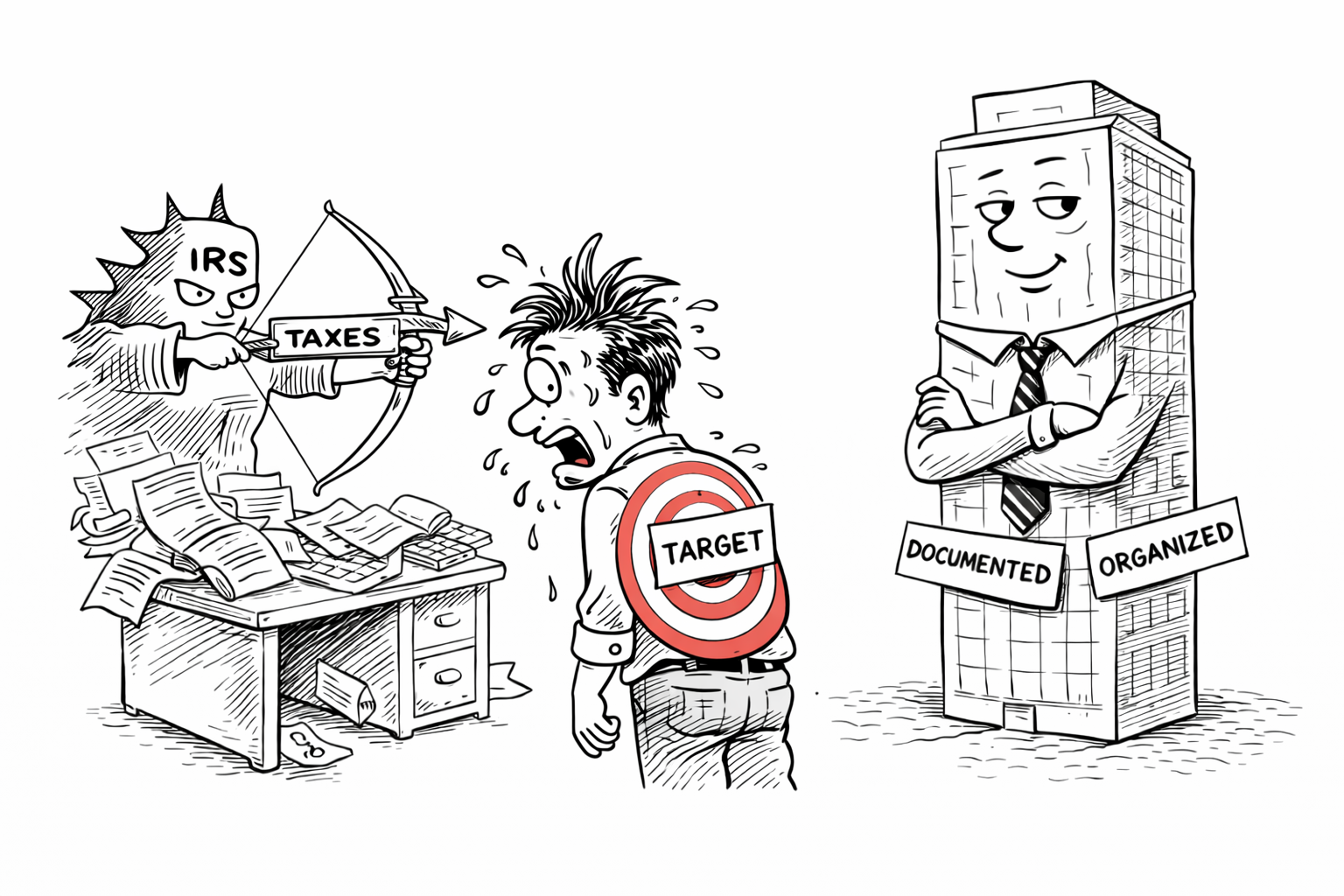
Perception:
The rules favor the big players. Small business owners don’t stand a chance.
Reality:
The rules are impartial. They reward structure and penalize disorder because ignorance of the law excuses no one.
After receiving that IRS letter years ago, I understood something important.
The real problem was not the notice.
It was the narrative.
Many business owners carry a quiet belief in the back of their minds:
The system is rigged.
The IRS targets small businesses.
Big corporations get loopholes.
The little guy gets squeezed.
It is an easy story to believe.
Taxes are complex. The language is technical. The enforcement agency feels distant and powerful.
And when something goes wrong, it feels personal.
But here is the uncomfortable truth.
The tax system is not emotional.
It does not wake up angry.
It does not decide to pursue one business owner because it dislikes them.
It runs on rules.
Those rules are often dense, sometimes frustrating, occasionally inefficient.
But they are not personal.
They are structural.
When a business owner says, “The system is out to get me,” what they often mean is:
“I do not fully understand how this system works.”
And misunderstanding breeds fear.
Fear breeds resentment.
Resentment prevents learning.
Daniel learned this the hard way.
His bookkeeping was inconsistent. Some months were neat. Others were scattered across receipts, email confirmations, and half-updated spreadsheets.
He waited until the last minute to file.
Every year.
He rarely reviewed financial reports during the year. He only looked at numbers when tax season forced him to.
And every April, he felt the same frustration.
“I always pay too much.”
Instead of asking why, he assumed unfairness.
He blamed the system.
He blamed his accountant.
He blamed tax rates.
He blamed “loopholes” other businesses must be using.
What he did not examine was his own disorder.
Large corporations appear to “win” not because the rules love them.
They win because they build structure around the rules.
They hire teams.
They document aggressively.
They plan years in advance.
They operate within frameworks.
The rules reward preparation.
They penalize disorder.
That is not favoritism.
That is predictability.
When Daniel began keeping clean monthly books, reviewing financial statements regularly, and making decisions before year-end instead of after it, something surprising happened.
The resentment faded.
Not because tax rates changed.
Because clarity replaced chaos.
When you understand how tax authorities interpret data, how compliance thresholds work, how classification rules are defined, and how documentation supports your position, the system becomes far less intimidating.
It becomes mechanical.
And mechanical systems can be learned.
The calm business owner does not assume hostility.
He assumes responsibility.
He does not blame the system.
He studies it.
He does not complain about complexity.
He builds structure around it.
The tax system is not out to get you.
But it will expose disorder.
And disorder, when examined honestly, always reveals opportunity for structure.
Most business owners never move past resentment.
And that resentment fuels the next myth.