Some business expenses are easy to understand months later.
Others are not.
A charge for fuel usually explains itself. A payment to a software provider is obvious. But many transactions fall into a gray area where the numbers alone do not tell the full story.
That is where receipts and notes become essential.
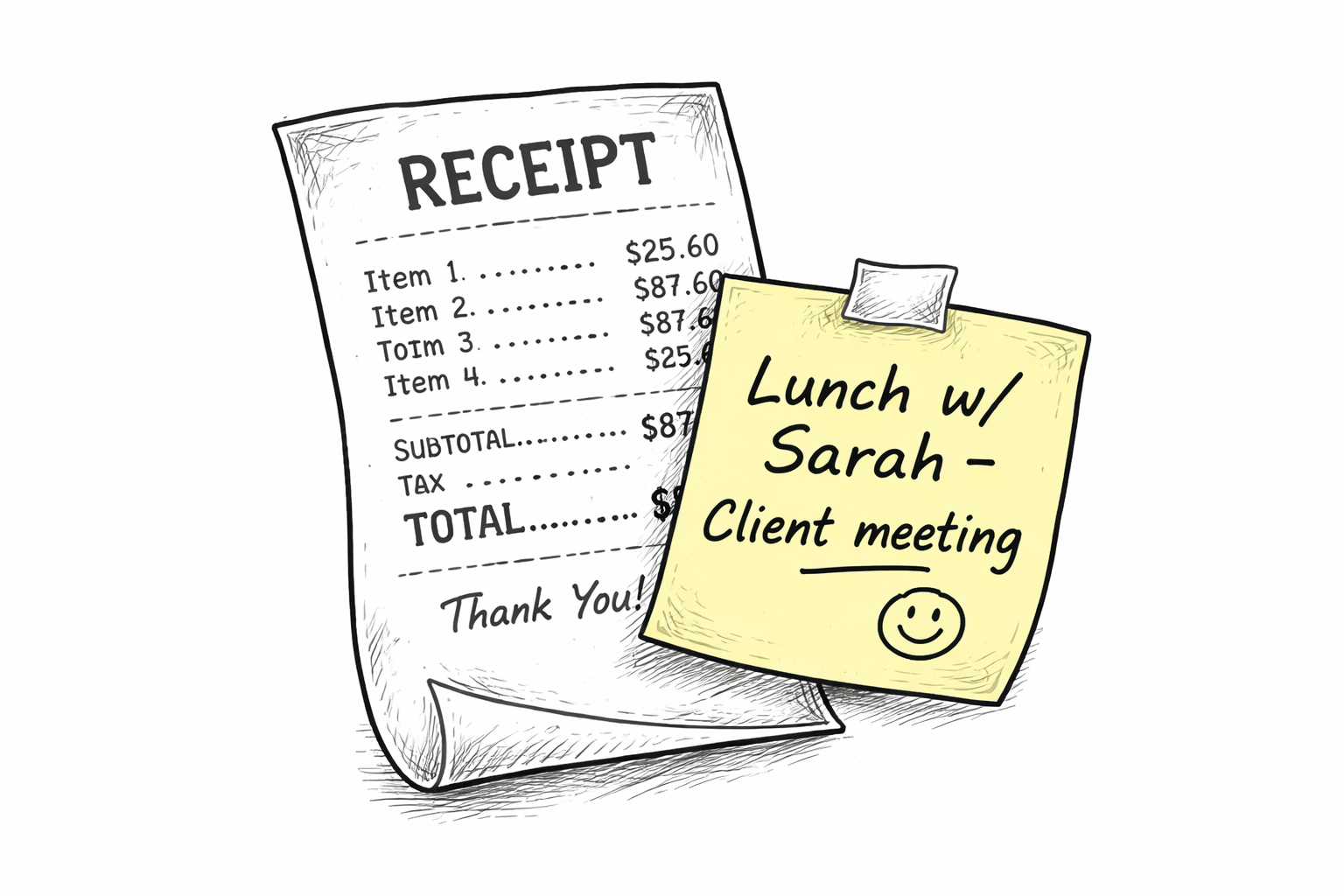
A receipt captures the details of what was purchased. A short note captures the reason behind it. Together, they create a small record of context that transforms a simple transaction into a complete explanation.
Without that context, the numbers can become surprisingly mysterious.
Imagine reviewing a statement and seeing a restaurant charge from eight months ago. Was it a client meeting? A quick meal during travel? Something personal that should never have been in the business account?
The amount does not answer those questions.
The receipt might.
And a brief note certainly would.
This is the quiet problem many business owners face. They assume they will remember the story behind a purchase when it matters.
But memory fades quickly when transactions blend together over time.
What felt obvious in the moment becomes uncertain later.
Tax-ready systems make room for that reality. They encourage capturing the story while it is still fresh. A quick note added to a transaction. A receipt stored alongside it. A simple habit that preserves clarity.
When that habit exists, bookkeeping becomes easier for everyone involved. Questions are answered immediately. Decisions become straightforward. Reviews happen quickly.
Without those small pieces of context, every unusual transaction becomes a puzzle waiting to be solved.
And puzzles multiply.
The goal is not perfection. It is simply making sure the numbers carry their story with them.
Receipts hold the details.
Notes hold the meaning.
Together, they keep the books understandable long after the moment has passed.