Brian liked things to feel tidy.
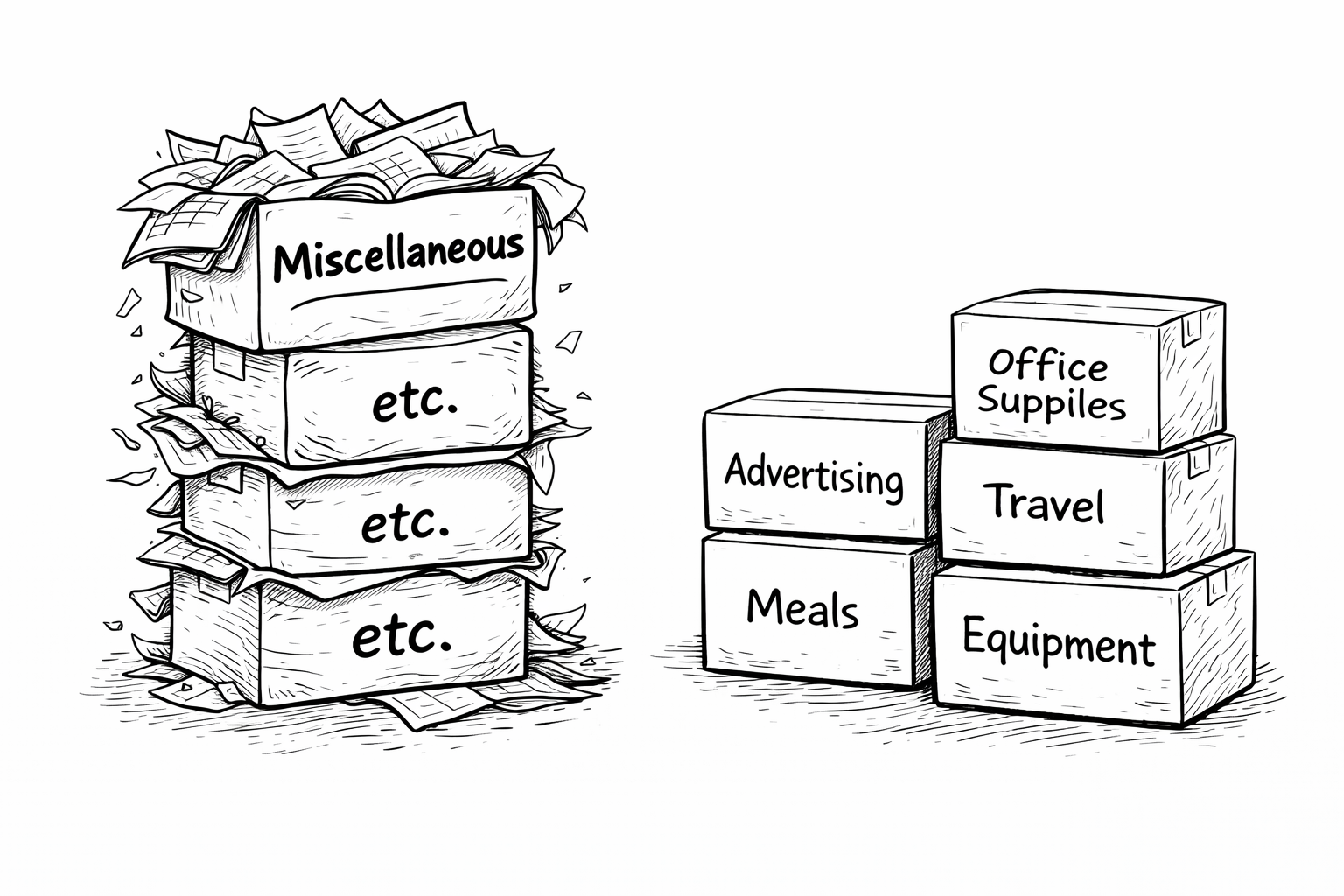
When he set up his books, he created categories that sounded sensible. Logical. Broad enough to catch everything without too much fuss. “General Expenses” felt safe. “Miscellaneous” felt flexible. A couple of catch-all categories gave him breathing room when something didn’t quite fit.
At first, it felt efficient.
Over time, it became invisible.
Those friendly-sounding categories began to swallow detail. Different kinds of spending landed in the same bucket. Patterns disappeared.
Reports started to look clean on the surface while telling very little underneath.
Nothing looked wrong. That was the danger.
Categories that sound right often feel comforting because they reduce decision-making in the moment. When something doesn’t fit cleanly, you park it somewhere reasonable and move on. The problem is that reasonable today becomes confusing tomorrow.
Tax-ready books favor clarity over convenience.
When categories are too broad, they hide information that matters later. When they are too vague, they force someone else to ask follow-up questions. When they change meaning from month to month, reports lose their usefulness entirely.
Good categorization does not mean more categories. It means better ones. Categories that reflect how the business actually operates. Categories that stay consistent. Categories that mean the same thing every time they are used.
This is where many businesses unintentionally sabotage themselves. They build books that look organized but do not support understanding. At tax time, or during review, someone has to unpack what those categories really contain.
And unpacking costs time.
Clean categories create clean stories. They allow trends to emerge naturally. They make reports readable at a glance. They help business owners see where money is really going, not just where it was parked.
The best test of a category is simple. If you had to explain it to someone else six months from now, would the name still make sense?
If the answer is no, the category is working against you.
Tax-ready categorization is not about being clever or exhaustive. It is about being clear and consistent. When categories do their job well, they quietly support every decision that comes after.
When they don’t, they quietly create confusion.
Confusion is never neutral. Someone always pays for it. And I’ll bet you know who ends up footing that bill.