Every year, Kevin told himself the same thing.
“I’ll deal with it later.”
Kevin ran a growing service business. He was good at what he did, busy most days, and proud that work kept coming in. Bookkeeping was never ignored exactly. It was simply postponed.
When a transaction appeared that he did not immediately recognize, he shrugged. He would remember later. When receipts piled up in his inbox, he flagged them for another day. When categories felt close enough, he made a quick call and moved on.
Tax time was when everything would get sorted properly.
At least that was the plan.
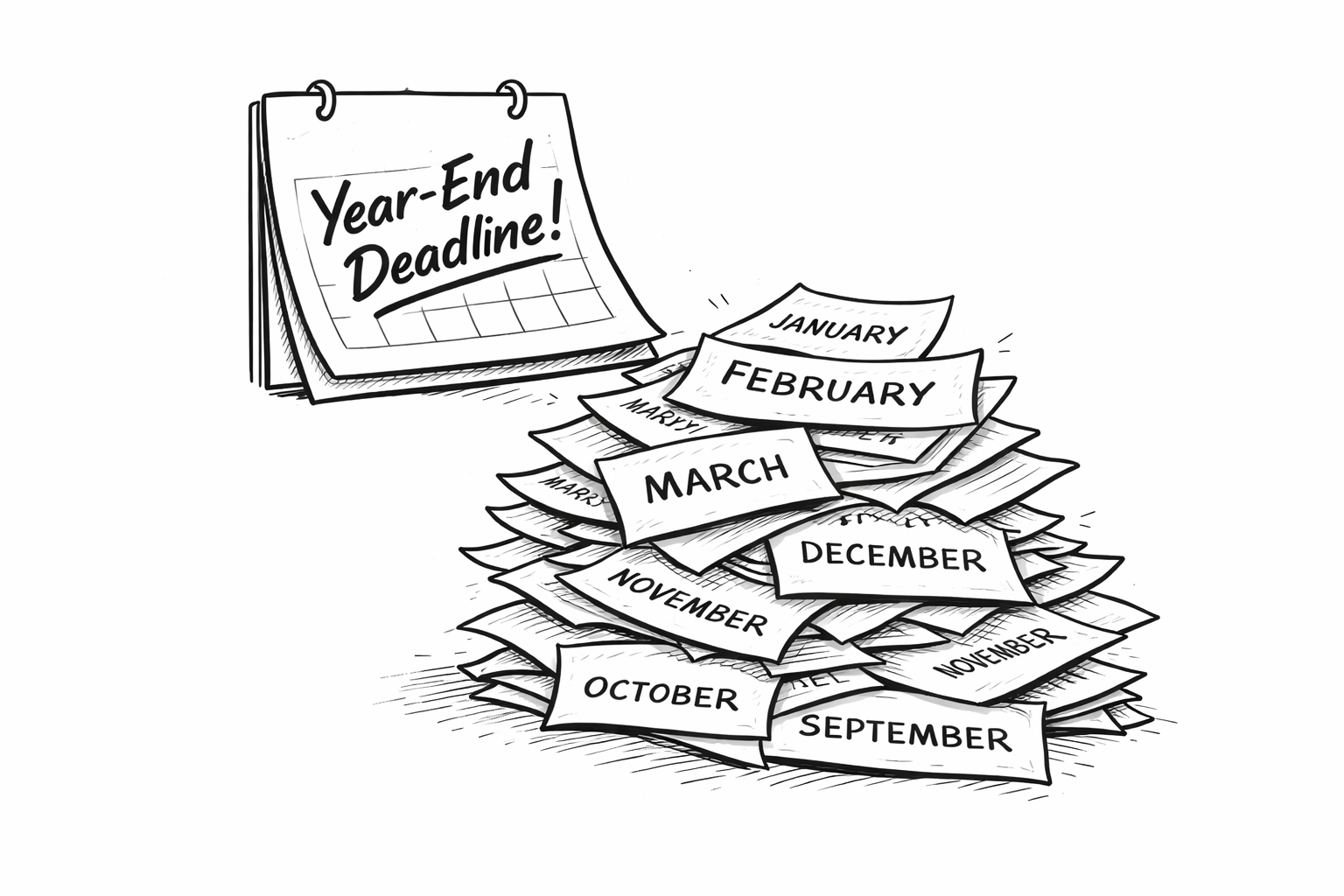
By the time March rolled around, “later” had arrived with a thud. Kevin sat down with a year’s worth of transactions and realized something uncomfortable. What once felt obvious no longer was.
That charge from early spring looked familiar, but the reason behind it was fuzzy. A cluster of expenses from summer blended together. A few large transactions stood out, but the details had slipped away. He found himself staring at numbers, trying to reconstruct intent from memory.
Memory, it turns out, is a fragile filing system.
Kevin spent hours retracing steps. Opening old emails. Searching calendars. Guessing more often than he liked. The work was slow, frustrating, and mentally exhausting. What should have taken minutes took days.
This is the myth many business owners believe. That sorting later is easier than deciding now.
It feels efficient in the moment. It feels flexible. It feels harmless.
But deferred clarity always comes due with interest.
Tax-ready work is not about doing everything perfectly in real time. It is about doing enough, consistently, while the information is still fresh. A short note today replaces a long guessing session months later. A small decision made early prevents a big one under pressure.
Sorting at tax time turns bookkeeping into archaeology. You are digging through layers of past activity, hoping the clues are still there.
Tax-ready systems work differently. They assume that memory fades and build around that truth. They favor small, steady habits over heroic cleanup efforts.
The businesses that feel calm at tax time are not the ones who worked hardest in March. They are the ones who made things easier all year long.
“I’ll just sort it later” sounds reasonable.
Until later arrives.
Tax-ready books remove that moment entirely.